2026 Top Pallet Jack Types What Should Global Buyers Choose?

Time:2026-10-19 Author:Henry
0%

Choosing a Pallet Jack in 2026 is no longer a simple question of price. Global buyers must match equipment with load weight, aisle width, floor quality, labor patterns, and service access.

Fortune Business Insights estimates that the global pallet truck market will continue expanding through 2032, driven by warehouse modernization and e-commerce fulfillment. Its market definition includes manual and powered models, so buyers should avoid treating every growth figure as directly comparable. That detail matters. A busy distribution center may need an electric walkie pallet jack, while a small workshop may perform better with a reliable manual unit. High-lift pallet jacks can reduce bending during short transfers. Rough-terrain models suit construction yards, but they can feel excessive on smooth warehouse floors.

MHI’s 2024 Industry Report also identifies automation, labor shortages, and supply-chain resilience as major material-handling priorities. John Paxton, former CEO of MHI, stated, “The supply chain is the backbone of our economy.” His point applies directly here. A Pallet Jack is small equipment, yet it can influence picking speed, worker fatigue, and daily bottlenecks.

The best choice is rarely the most advanced one. It is the model that survives real operating conditions. Buyers should compare battery availability, rated capacity, turning radius, fork dimensions, warranty coverage, and local technician support. One overlooked issue remains operator training. Even excellent equipment performs poorly when users rush corners or overload forks. This guide reviews the top Pallet Jack types for 2026, while recognizing an uncomfortable truth: specifications alone cannot predict field performance.
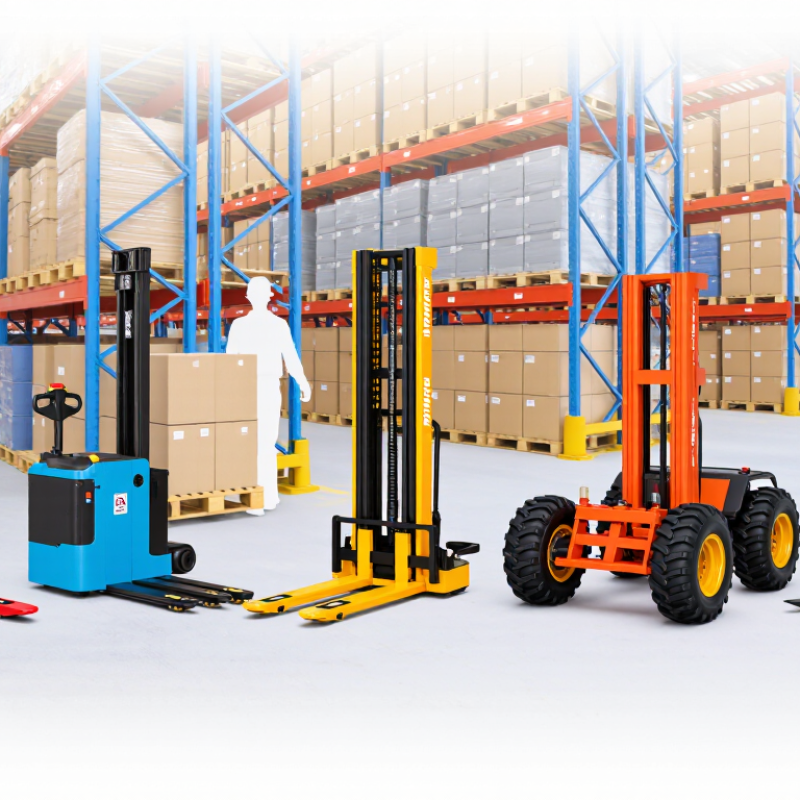
2026 Top Pallet Jack Types What Should Global Buyers Choose?

Pallet Jack Basics: Purpose, Structure, and Operating Principles

A pallet jack moves loads across warehouses, docks, and short-distance production areas. Its job is simple: lift a pallet slightly, then guide it safely. The basic structure includes two forks, a steering handle, load wheels, steering wheels, a hydraulic pump, and a lowering valve. Manual models rely on repeated handle strokes. The pump forces hydraulic fluid into a cylinder, raising the forks only a few inches. Powered models add a battery, drive motor, and control system. The design is uncomplicated. It is not foolproof.

Load capacity depends on more than the rating plate. Pallet condition, floor slope, wheel material, and load balance all matter. Keep the load centered and the forks fully inserted. A tilted or broken pallet can shift suddenly. OSHA estimates that powered industrial trucks cause about 35,000 serious injuries and 62,000 non-serious injuries annually in the United States. This figure covers several truck types, but it reinforces a practical point: small equipment still needs disciplined operation. The 2024 MHI Annual Industry Report surveyed more than 2,000 supply chain professionals and found that 83% expected to maintain or increase innovation investment. For global buyers, that may favor powered assistance in high-volume facilities. Yet manual jacks remain useful for lighter tasks, narrow aisles, and emergency flexibility. Selection should begin with actual travel distance, pallet weight, charging access, floor quality, and operator training. A cheaper choice can become expensive when wheels wear quickly or controls confuse new users.

Main Pallet Jack Types and Their Key Differences

Choosing a pallet jack in 2026 starts with the load, travel distance, and floor condition. Manual pallet jacks suit short moves, moderate loads, and tight aisles. They need no battery, but operators provide the power. Electric walkie models reduce pushing effort and support frequent warehouse cycles. Rider versions move faster across larger facilities, although they require more space and training. High-lift jacks raise pallets for ergonomic loading, while scale models weigh goods during movement. Rough-terrain units use larger wheels for uneven outdoor surfaces. That convenience can add cost.

Tips: Match the jack to your real workflow, not the heaviest possible load. Check pallet entry height, fork length, turning radius, battery access, and local service capability. For cold rooms or dusty yards, ask for tested operating limits. Measure aisles. Request a live trial with your pallet sizes. Fit matters. Do not rely only on catalog capacity.

From warehouse assessments, the most practical choice is rarely the most advanced model. A manual jack may outperform an electric one in a low-volume store with short travel. Conversely, electric drive pays back through reduced fatigue and steadier handling. Rider equipment can be unnecessary in narrow aisles. High-lift designs also need careful stability checks. I have seen buyers over-specify capacity and under-check after-sales support. That is an avoidable mistake. Compare total operating cost, expected workload, spare-part access, and operator comfort before ordering. Your first choice may still need revision after a floor trial.

How to Match Pallet Jack Types With Workplace Requirements

Choosing the right pallet jack starts with the workplace, not the catalog. A manual pallet jack suits short, flat moves with moderate loads. It also works well where charging stations are unavailable. For longer travel, frequent handling, or heavier pallets, an electric walkie model can reduce physical strain. A rider pallet jack may fit high-volume docks, but requires wider aisles and trained operators.

The Liberty Mutual 2024 Workplace Safety Index identified overexertion as a leading cause of serious workplace injury costs. This supports careful equipment matching, although the report does not measure pallet jack use directly. Measure travel distance, floor condition, pallet weight, turning space, and daily moves. Uneven concrete can make small wheels frustrating. Cold storage can also affect battery performance. MHI’s 2024 Annual Industry Report found that 55% of respondents expected to increase supply chain innovation investment. Automation is growing, but buying electric equipment without checking charging access is an avoidable mistake.

Tips:

Mark the longest route on the floor. Test a loaded jack during peak traffic. Choose manual equipment for occasional, short moves. Choose powered assistance when repetition, distance, or load weight raises fatigue risk. Ask operators for feedback after one week. Their practical comments may challenge the original specification. Recheck maintenance access, emergency controls, and operator training before purchase. OSHA guidance also favors reducing excessive pushing and pulling forces, but each site still needs its own assessment.

Essential Factors for Global Buyers: Capacity, Safety, and Compliance

2026 Top Pallet Jack Types: What Should Global Buyers Choose?

Capacity, safety, and compliance should guide every pallet jack purchase. Capacity is not a guess. Buyers must check the actual load weight, pallet condition, load center, aisle width, and floor slope. A 2,500-kilogram rating may become unsafe when the load is uneven or poorly positioned. Manual models suit short travel and light-duty handling. Electric models reduce pushing effort, but they require battery controls, operator training, and maintenance records.

Safety deserves sharper attention. OSHA estimates that powered industrial trucks cause about 35,000 serious injuries and 85 fatal injuries annually in the United States. The Bureau of Labor Statistics recorded 1,257 fatal work injuries in transportation and material-moving occupations in 2023. These figures cover wider equipment categories, not pallet jacks alone. Still, they reveal the risk around rushed handling. Buyers should review emergency stops, steering stability, braking performance, visibility, and pedestrian separation. Compliance also needs local checking. ISO 3691-5 and applicable regional standards can influence design, testing, labels, and instructions. One global specification rarely fits every market.

Tips: Ask suppliers for test reports, rated-load charts, inspection procedures, and language-specific manuals. Confirm charger compatibility before shipping. Record the pallet dimensions used in your warehouse. A cheaper unit may seem efficient, but downtime and training gaps can change that calculation. I would not rely on catalog capacity alone.

2026 Top Pallet Jack Types What Should Global Buyers Choose? - Essential Factors for Global Buyers: Capacity, Safety, and Compliance
Pallet Jack Type Typical Rated Capacity Typical Lift / Operating Range Power Source and Controls Key Safety Features Best-Fit Applications Compliance Considerations Global Buyer Recommendation
Manual Hand Pallet Truck 2,000–3,000 kg Fork height generally about 75–200 mm.
Fork lengths commonly range from 800–2,500 mm.
Human-powered hydraulic pump and steering handle. Parking brake on selected models, controlled lowering valve, rounded handle, and overload protection on many hydraulic units. Short-distance movement on smooth warehouse floors, retail backrooms, loading docks, and general pallet handling. Check applicable machinery-safety, ergonomic, load-rating, and workplace-equipment requirements in the destination market. ISO 3691-5 may be relevant to pedestrian-propelled industrial trucks. Best value for low-frequency handling and limited travel distances. Select larger capacities only when the floor, pallet, and load are suitable.
Electric Walkie Pallet Truck 1,500–2,500 kg Fork height generally about 75–200 mm.
Typical travel speed is approximately 4–6 km/h, depending on configuration and local limits.
Battery-powered traction and lift; tiller-head controls. Emergency reverse button, electromagnetic braking, horn, key or access control, battery discharge protection, and automatic speed reduction with the tiller raised on many models. Frequent horizontal transport, order picking, dock work, and medium-volume warehouse operations. Powered versions may fall under national powered-industrial-truck rules. For exports, verify ISO 3691-5, applicable electrical safety requirements, charger compatibility, EMC requirements, and battery shipping documentation. Strong all-round choice for warehouses requiring higher productivity without a riding platform.
Ride-On Pallet Truck 2,000–3,000 kg Fork height generally about 75–200 mm.
Suitable for longer internal travel than a manual or walkie truck.
Battery-powered traction and hydraulic lift; standing or seated operator platform. Operator platform protection, emergency disconnect, anti-rollback control, horn, braking system, guarded controls, and speed management. Distribution centers, cross-docking, long warehouse aisles, and repeated movement over larger distances. Confirm requirements for powered industrial trucks, operator training, guarding, braking, stability, noise, EMC, and battery safety. National rules may require documented training and inspections. Preferred for high-throughput facilities with long travel routes. It needs more aisle space, operator training, and maintenance than a walkie truck.
Electric Pallet Stacker 1,000–2,000 kg Lift heights commonly range from approximately 1.6–3.5 m, depending on mast type.
Not intended only for floor-level transport.
Battery-powered travel and lifting; walk-behind or platform variants. Mast guarding, load-backrest options, emergency stop, electromagnetic braking, lowering-speed control, and stability features. Pallet placement on racks, low-level stacking, production lines, and small warehouses where a forklift is unnecessary. Verify rated capacity at the specified lift height, residual capacity charts, mast visibility, stability testing, and applicable industrial-truck standards. Battery and charger compliance must match the destination market. Best choice when buyers need vertical storage at lower acquisition and operating complexity than a counterbalance forklift.
High-Lift Scissor Pallet Truck 1,000–1,500 kg Platform or forks may lift to approximately 700–800 mm, depending on design.
Some models provide a working-height function rather than high-bay stacking.
Manual hydraulic or electric lift; manual or powered travel. Mechanical or hydraulic overload protection, stabilizing outriggers, controlled lowering, foot protection, and emergency stop on powered versions. Ergonomic pallet positioning, assembly work, goods inspection, picking, and short-distance transport. Confirm maximum load at raised height, stability with uneven loads, pinch-point guarding, and workplace lifting-equipment requirements. Recommended for ergonomic handling rather than high-level pallet storage. Do not substitute it for a stacker unless the lift and stability ratings meet the application.
Stainless-Steel or Washdown Pallet Truck 1,000–2,500 kg Fork height generally about 75–200 mm.
Corrosion-resistant designs may use sealed components and special bearings.
Manual hydraulic or electric, depending on hygiene and throughput requirements. Corrosion-resistant frame, sealed or protected hydraulic components, smooth surfaces, and reduced dirt-collection areas. Food processing, beverage, pharmaceutical, cold-room, seafood, and chemically aggressive environments. Verify the required washdown rating, material grade, lubricant suitability, ingress protection, food-contact policy, and hygienic-design requirements. Stainless steel alone does not prove sanitary compliance. Choose when corrosion, frequent cleaning, or hygiene controls justify the higher purchase cost.
Low-Profile Pallet Truck 1,000–2,500 kg Forks may be approximately 35–65 mm high when lowered, depending on the model.
Designed for pallets or skids with limited underside clearance.
Manual hydraulic or electric options. Controlled lowering, reinforced fork tips, overload protection, and clearances designed for low-entry pallets. Export pallets, specialty skids, low-clearance platforms, and applications where standard forks cannot enter. Check compatibility with the actual pallet opening, fork thickness, wheel clearance, and rated load center. Capacity is not interchangeable with standard-height models. Select only after measuring pallet openings and underside clearance. It solves an access problem but may offer less ground clearance.
Rough-Terrain Pallet Truck 1,000–2,500 kg Ground clearance and lift geometry vary widely; generally intended for uneven outdoor surfaces rather than high stacking. Manual, electric, or engine-powered configurations may be available. Large pneumatic or semi-pneumatic wheels, stronger chassis, improved ground clearance, braking control, and load restraint provisions. Construction sites, agriculture, outdoor events, lumber yards, and unpaved loading areas. Verify surface limits, grade capability, weather protection, braking performance, emissions rules for engine-powered versions, and stability with raised loads. Use only where standard warehouse pallet trucks cannot operate safely. Outdoor capability does not eliminate the need for a firm, stable travel surface.
Buyer note: Capacity ranges are typical market ranges, not universal specifications. Actual capacity depends on the load center, pallet condition, fork dimensions, lift height, floor quality, battery configuration, mast type, and manufacturer rating. Before purchase, request the rated-capacity plate, residual-capacity chart where applicable, operating instructions, inspection records, applicable conformity documentation, and destination-country compliance evidence. For lithium batteries, confirm transport documentation such as UN 38.3 test evidence where required.

2026 Buying Guide: Comparing Costs, Features, and Suppliers

In 2026, global buyers should compare pallet jacks by workload, floor condition, and total ownership cost. Manual pallet jacks remain affordable for short moves and low daily volume. Electric walkie models reduce operator effort and improve consistency in busy aisles. Rough-terrain versions suit construction yards, farms, and uneven outdoor surfaces. They usually cost more and require stronger wheels, sealed components, and careful maintenance.

Price alone can mislead. Compare purchase cost, battery replacement, charger quality, spare-part access, warranty coverage, and technician response times. A practical supplier should provide load charts, test records, operating guidance, and clear delivery terms.

Ask for references from facilities with similar pallet weights and working temperatures. During evaluation, measure turning space, lift speed, noise, and stopping control. Small details matter.

The cheapest quote may still become expensive after one year. However, a complex electric model is not always better; some sites lack charging discipline or trained users. That weakness deserves honest attention.

Tips: Request a sample unit or site trial before placing a large order. Test it with your heaviest pallet on the narrowest route. Check fork dimensions carefully. Confirm regional voltage compatibility and battery recycling arrangements. Keep a written comparison sheet, but review the assumptions behind it. Numbers can look precise while missing downtime, operator fatigue, or delayed parts.

FAQS

What is the main purpose of a pallet jack?

It lifts a pallet a few inches and moves it across short warehouse distances. Keep the load low and controlled.

What parts make up a manual pallet jack?

Common parts include two forks, load wheels, steering wheels, a handle, hydraulic pump, and lowering valve. The design is simple. It is not foolproof.

How does a manual pallet jack raise a load?

Repeated handle strokes push hydraulic fluid into a cylinder. The cylinder raises the forks slightly above the floor.

When should buyers choose an electric pallet jack?

Electric models can reduce pushing effort during frequent or longer warehouse movements. They need battery controls, charging access, maintenance records, and trained operators.

How should buyers check the required load capacity?

Check the actual load weight, pallet condition, load center, floor slope, and aisle width. Center the load. Insert the forks fully. A rating plate alone is not enough.

What pallet conditions can create extra risk?

Broken boards, tilted pallets, and uneven loads can shift suddenly during lifting or movement. Inspect the pallet before entering the forks. Small damage matters.

Which safety features deserve attention before purchase?

Review braking, steering stability, visibility, emergency stops, and pedestrian separation. Operators also need clear procedures and practical training.

What should global buyers verify about compliance?

Check applicable regional requirements, testing documents, labels, and instruction languages. Relevant international standards may influence design and documentation. One specification may not fit every market.

What documents and details should buyers request from suppliers?

Request rated-load charts, test reports, inspection procedures, and language-specific manuals. Confirm charger compatibility before shipping. Record your actual pallet dimensions. I would not trust catalog claims alone.

Conclusion

This 2026 guide explains the purpose, structure, and operating principles of a Pallet Jack, helping global buyers understand how these machines support safe and efficient pallet handling. It compares major types, including manual, electric, high-lift, and specialized models, while highlighting differences in lifting capacity, maneuverability, power systems, control methods, and suitable working environments. By matching pallet jack types with warehouse layouts, load characteristics, operating distances, floor conditions, and usage frequency, buyers can select equipment that improves productivity without unnecessary expense.

The guide also outlines essential purchasing factors such as rated capacity, safety features, ergonomic design, battery performance, maintenance requirements, and applicable compliance standards. A practical 2026 buying approach compares total ownership costs, useful features, after-sales support, spare-parts availability, and supplier reliability rather than focusing only on the initial price. This balanced evaluation enables buyers to choose dependable equipment that meets workplace needs, supports long-term efficiency, and remains suitable for international procurement requirements.

Henry

Henry

Henry is a dedicated marketing professional with a profound expertise in the company's offerings. With years of experience in the industry, he possesses an impressive understanding of the market dynamics and consumer behaviors that drive success. Henry is committed to sharing his insights through......