How to Choose the Right Adjustable Rack for Your Needs

Time:2026-11-10 Author:Sienna
0%

Choosing an Adjustable Rack is less about finding the most flexible model and more about matching its design to the job. A rack for paint cans in a garage has different demands from one holding archive boxes or workshop tools. Before comparing finishes or prices, measure the available floor space, ceiling height, and items you plan to store. A tape measure and a quick inventory can prevent a frustrating return.

Capacity matters. Check the manufacturer’s stated load limit, and find out whether it applies to each shelf or the entire unit. Consider how weight will be distributed, too. Dense items, such as books or metal parts, need stable support and sensible placement. It is easy to focus on the lowest price. That can be a mistake. Look at shelf material, frame construction, locking or bracing features, and how securely the rack can be assembled. If it will stand in a damp area, confirm that its finish suits those conditions.

Adjustability should be useful, not just listed as a feature. Shelf spacing that changes in small increments may help accommodate bins today and taller equipment later. Still, extra flexibility cannot make a poorly sized rack fit. That is worth remembering. The sections that follow explain how to compare rack types, assess capacity and materials, and check installation needs. With those details in view, you can choose a rack that fits your space, your stored items, and the way you actually work.
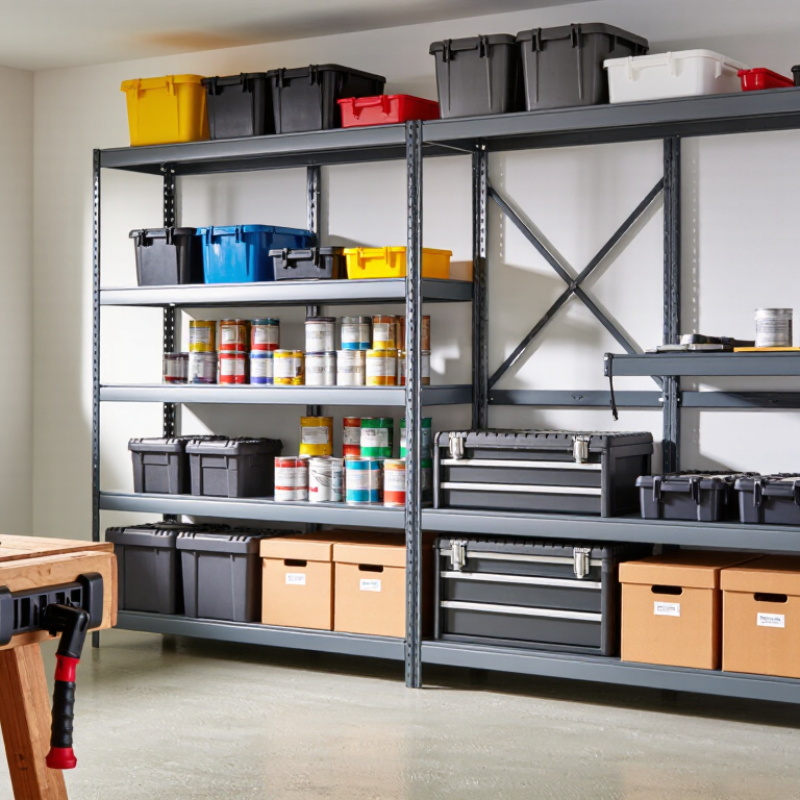
How to Choose the Right Adjustable Rack for Your Needs

What an Adjustable Rack Is and How It Works

An adjustable rack is a storage frame with shelves, rails, or supports that can move to different positions. Upright posts usually have evenly spaced holes or slots. Pins, bolts, or clips hold each shelf at the chosen height. This simple mechanism lets one rack fit tall containers today and shorter boxes later. No special tools may be needed, though some designs require a wrench.

The fit matters. Measure the tallest item, then leave room to lift it off the shelf. Check the rack’s stated load limit and whether it applies to each shelf or the whole unit. Place heavier items low and spread their weight across the shelf. A lopsided load can make even a solid frame feel unstable. Adjust shelves only when they are empty, and confirm every support is fully seated before loading them again. Check the floor, too; an uneven tile can cause wobble. I’ve found that measuring twice saves effort, but I still sometimes forget to allow for handles. A small oversight. Recheck the layout after a week of use, when real storage habits become clearer.

Key Factors That Shape Your Rack Requirements

Choosing an adjustable rack starts with what it must hold and where it will stand. Measure the available height, width, and depth, including space for doors, pipes, or nearby equipment. Then check the rack’s rated capacity and how that limit applies to each shelf. A rack may support a heavy total load but still have a lower per-shelf limit. Consider whether you’ll store bulky boxes, small bins, or tools that need frequent access.

Tips: Measure twice. Leave room for your hands and the items you’ll retrieve. Place heavier loads on lower shelves, and keep weight spread evenly rather than concentrated at one edge.

Think about the environment, too. Damp rooms, dusty workshops, and clean indoor storage can call for different materials or finishes. If shelf heights need regular changes, check that adjustment points are easy to reach and lock securely. In practice, a rack that looks spacious in a product diagram may feel cramped once real containers are loaded. I would test the planned layout with a tape measure and a few representative items before choosing. That small check can reveal awkward gaps or shelves that are difficult to adjust.

Comparing Rack Types, Materials, and Load Capacities

An adjustable rack should match the shape of your items, not just the available floor space. Shelving racks suit boxes, tools, and pantry supplies because shelf heights can change as storage needs shift. Wire shelves allow airflow and make spills easier to spot, but small parts may need bins. Cantilever racks work better for long items, such as timber or pipes, which can be awkward on standard shelves. Measure the longest item before choosing.

Material affects durability and upkeep. Powder-coated steel is a practical choice for dry garages and storerooms, while stainless steel resists corrosion better in damp areas. Aluminum is lighter and easier to move, though it may not suit every heavy-duty application. Plastic racks resist rust and are simple to clean, but can flex under concentrated weight. Not all plastic is equal.

Check the load rating for each shelf, not only the rack as a whole. A rack rated for a large total load can still become unsafe if one shelf carries too much. Keep heavy items low, distribute weight evenly, and allow for movement when loading or removing bulky objects. Read the maker’s capacity guidance, and account for uneven floors or frequent handling. A slightly oversized rack may feel wasteful at first. Still, choosing too small can create a messy workaround.

How to Choose the Right Adjustable Rack for Your Needs - Comparing Rack Types, Materials, and Load Capacities

Rack Type Common Materials and Decking Typical Adjustability Indicative Load Capacity Best Suited For Key Selection Considerations
Boltless steel shelving Painted or powder-coated steel frames; particleboard, wire, or steel shelf panels Shelf levels can usually be repositioned in increments along upright posts About 200–800 lb (90–360 kg) per shelf on many consumer and light-duty models Garages, storerooms, workshops, and general-purpose storage Check the rated load for the exact shelf span and decking. Particleboard may be unsuitable for damp environments.
Adjustable wire shelving Chrome-plated, zinc-plated, or epoxy-coated steel wire shelves and posts Clip-style shelf supports allow shelves to be moved along grooved posts Often about 300–800 lb (135–360 kg) per shelf when evenly distributed; ratings vary by model Pantries, kitchens, utility areas, and spaces where airflow or visibility matters Confirm whether the rating applies per shelf or to the complete unit. Use shelf liners for small items.
Rivet shelving Steel uprights and beams with particleboard, plywood, or wire decking Beam levels are repositioned on rivet connections, commonly without nuts or bolts Commonly about 500–1,000 lb (225–450 kg) per shelf for many medium-duty configurations Stockrooms, workshops, and hand-loaded storage of bulky cartons or equipment Capacity depends on beam length, decking, and support configuration. Secure the unit against tipping where required.
Selective pallet rack Structural or roll-formed steel frames and beams; wire or solid pallet supports Beam elevations can be changed to suit pallet and product heights Often about 2,000–5,000 lb (900–2,270 kg) per beam level, typically stated for a pair of beams Warehouses needing direct access to individual pallet positions Use the rack’s rated beam and frame capacities. Loads, anchors, connections, and floor conditions require proper design and inspection.
Cantilever rack Steel columns, bases, and adjustable cantilever arms Arms can generally be repositioned vertically on the columns Capacity varies widely; many light- to medium-duty systems list roughly 500–2,500 lb (225–1,135 kg) per arm Long or awkward items such as lumber, pipe, tubing, and furniture components Check whether the rating is per arm, per arm pair, or per column. Select arm length and column height for the load dimensions.

Capacity note: These figures are indicative ranges found across commonly available rack configurations, not guaranteed ratings for every product. Load ratings are not directly comparable across rack types because they may use different rating bases. Always follow the exact product rating, distribute loads evenly, and observe any requirements for anchoring, decking, and installation.

Matching Rack Dimensions to Your Space and Items

Measure the usable floor area, not just the empty corner where you hope to place the rack. Include baseboards, door swings, nearby appliances, and the space needed to walk past it. Measure twice. A rack that fits on paper can still block a drawer or leave too little room to lift bulky items safely.

Match shelf depth and height to what you actually store. Shallow bins may slide off deep shelves, while tall containers need enough clearance above each shelf. Measure your largest items, including handles and lids. Then allow a little extra room for easy access. Small details matter. If you store mixed items, adjustable shelf spacing can adapt as needs change, though frequent adjustments may become a nuisance.

Check the rack’s stated dimensions and weight limits before choosing a size. The total capacity is not always the same as the limit for each shelf, and weight should be distributed evenly. For a narrow space, compare the rack’s full footprint with your measurements, including feet or wheels. Leave clearance for airflow and cleaning where needed. It is tempting to choose the largest rack that fits, but that can make everyday access awkward. A slightly smaller unit may work better if it keeps frequently used items within reach.

Checking Safety, Adjustability, and Long-Term Value

How to Choose the Right Adjustable Rack for Your Needs

Checking Safety, Adjustability, and Long-Term Value

Start with the load, not the price. Check the rated capacity for each shelf and the entire rack, then compare it with your heaviest planned load. Include the weight of bins and tools. Inspect beam locks, uprights, and feet; a loose pin or uneven floor can undermine an otherwise solid setup. The U.S. Bureau of Labor Statistics recorded 2.6 million nonfatal workplace injury and illness cases in private industry in 2023. That figure is not specific to racks, but it is a reminder to consider safe access and handling. For industrial storage, have a qualified professional verify the layout, anchoring, and floor capacity.

Adjustability matters when stock sizes change. Measure the tallest items, then check how easily shelves reposition and lock. Small details matter. MHI’s 2024 Annual Industry Report found that 55% of surveyed supply-chain leaders expected to increase investment in innovation over the next five years. This is not proof that an adjustable rack will save money; it does show why flexible operations attract attention. Compare replacement parts, corrosion resistance, and the effort required to change shelf height. A rack may seem like a bargain until one damaged component forces a full replacement. I would still question any setup that needs frequent adjustment: flexibility is useful, but constant reconfiguration can signal a poor fit.

How to Choose the Right Adjustable Rack for Your Needs

Suggested evaluation weights — a practical starting rubric, not measured market data.

Give safety the greatest weight: check the stated load rating per shelf and for the complete rack, and confirm shelves lock securely. Compare adjustment range and increments with the items you plan to store. For long-term value, consider durability, replaceable parts, warranty terms, and the total cost over time. Adjust these weights to suit your space and use.

FAQS

What is an adjustable rack?

It is a frame with shelves or supports that move to different heights. Pins, bolts, or clips hold each shelf in place. Simple, but useful.

How should I choose shelf spacing?

Measure your tallest containers, including lids and handles. Leave extra room to lift them off. I sometimes forget the handles.

How do I check whether a rack fits my space?

Measure the floor area, height, and depth. Include door swings, baseboards, pipes, and walking space. Measure twice.

What should I know about weight limits?

Check both the total capacity and the limit for each shelf. Spread items evenly, and place heavier loads on lower shelves.

When should shelves be adjusted?

Empty the shelf before moving its supports. Confirm every pin, bolt, or clip is seated before adding items again. Check carefully.

What can make a rack feel unstable?

Uneven floors and lopsided loads can cause wobbling. Check the floor and distribute weight across each shelf.

How can I tell if a shelf is deep enough?

Compare its depth with your containers. Shallow bins may slide on deep shelves, so check their fit before loading.

Should I choose the largest rack that fits?

Not always. A slightly smaller rack may keep everyday items easier to reach. Try the layout with a tape measure and a few real containers. A diagram can be misleading.

Conclusion

Choosing the right Adjustable Rack begins with understanding how its components fit together to support and organize items. Consider what you plan to store, how often you need to access it, and where the rack will be placed. These needs help determine the appropriate rack style, material, and load capacity, whether you need a compact option for light items or a sturdier structure for heavier storage.

Measure your available space and the items the rack must hold, allowing room for access and adjustment. Check that shelf heights can be changed easily and that the rack remains stable when loaded as intended. Comparing these practical details can help you find a solution that fits your space, adapts to changing needs, and offers lasting value.

Sienna

Sienna

Sienna is a skilled marketing professional with a deep expertise in our company’s core products and services. With a passion for innovation and detail, she plays a pivotal role in crafting insightful blog posts that not only highlight the unique features of our offerings but also provide valuable......