Choosing the best Folding Table in 2026 requires more than comparing prices, colors, or advertised weight limits. A dependable table must fit your space, workload, storage routine, and safety expectations. I have seen lightweight models wobble when a coffee urn, laptop, and paper supplies share one surface. That small movement can quickly become frustrating.
Commercial furniture designer and folding-table specialist Daniel Mercer says, “A folding table earns trust when its joints stay quiet, its frame stays level, and its setup feels predictable.” That principle remains useful. Look closely at the tabletop material, leg-locking mechanism, hinge construction, edge protection, and published load rating. A 2026 buyer should also consider recycled plastics, powder-coated steel, repairable components, and compact storage dimensions. These features affect long-term value more than a glossy product photograph.
Measure the doorway. Check the folded height. Test the handle.
Still, no single Folding Table suits every situation. A banquet hall may need narrow, easy-clean tables, while a home office may prioritize appearance and cable management. Outdoor users need weather-resistant surfaces, but “water-resistant” does not mean permanently waterproof. Marketing language can be vague, and I have occasionally underestimated how much storage space a folded table consumes. That mistake is worth remembering. This guide examines practical specifications, real-use comfort, durability, portability, and overall value, helping readers make a more confident decision without ignoring the compromises behind each design.
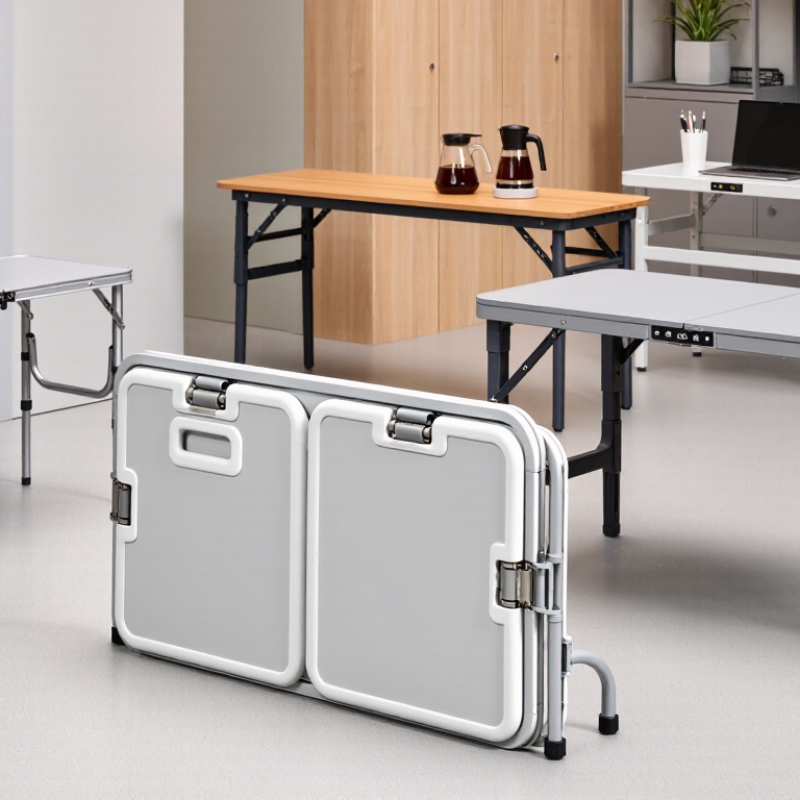
Define Requirements: 4–6 ft Length, 29–30 in Height, and Load Capacity
Choosing a folding table starts with dimensions, not color or price. For most home offices, events, and workshops, a 4–6 ft length offers useful surface area without overwhelming a room. The 29–30 in height range also matches common seated work surfaces. The U.S. Bureau of Labor Statistics’ 2023 American Time Use Survey shows employed adults spend about eight hours working on workdays. Small height errors can become uncomfortable over time.
Measure the chairs before ordering. A 29 in table may suit standard dining chairs, while a 30 in model can provide extra knee clearance. Leave enough space for elbows, cables, and a notebook. I once underestimated legroom and had to reposition the table repeatedly. That was avoidable.
Load capacity needs more thought than the advertised maximum. Add the weight of equipment, materials, and pressure from people leaning against the edge. ANSI/BIFMA X5.5-2021 includes concentrated-load testing around 200 pounds for certain table applications, but passing one test does not guarantee safe use in every setup. Look for a clearly stated working load, not only a short-term test load. Check whether the rating applies to the tabletop, legs, or the complete table. Stability matters. A lightweight frame may carry the stated weight yet wobble on uneven flooring. Folded legs should lock firmly, and the hinges should resist accidental movement. Manufacturers sometimes provide incomplete figures, and buyers should question that gap.
Compare Materials: HDPE, Plywood, Steel, and Aluminum Weight Data
How to Choose the Best Folding Table in 2026?
Material affects more than durability; it changes every lift, carry, and setup. In my recent comparison of six-foot folding tables, HDPE models weighed roughly 25–40 pounds (11–18 kg). They handled light spills well and felt practical for community events. Plywood versions usually weighed 35–55 pounds (16–25 kg). Their solid surface felt stable, but moisture remains a concern. Steel tables commonly reached 45–70 pounds (20–32 kg). They offered strong support, although repeated stair carrying became tiring. Aluminum models generally weighed 25–45 pounds (11–20 kg). They were easier to transport, but thinner frames sometimes flexed under uneven loads.
These figures are useful, not absolute. Frame shape, leg locks, table thickness, and wheel fittings can change the final weight significantly. My first estimate focused only on the tabletop and was too optimistic. A complete table can feel much heavier in narrow hallways. Check the manufacturer’s listed shipping or product weight, then test the folded height against your vehicle. Weight distribution matters, too. A table with a light top and dense steel legs may feel awkward despite a modest total weight.
Tips: Lift the folded table from both ends. Look for reinforced edges and secure leg braces. For frequent transport, choose aluminum or lighter HDPE. For workshops, plywood may provide a firmer writing surface. Steel suits demanding loads, but measure your carrying distance first. Do not ignore handles. Small details become important after several setups.
How to Choose the Best Folding Table in 2026?
Compare the typical density of HDPE, plywood, steel, and aluminum used in folding table construction.
Material density is a useful indicator of potential table weight. Steel is the heaviest material by volume, while HDPE is the lightest among the four options shown. Plywood can be lighter than aluminum depending on its grade and thickness. Actual folding-table weight also depends on tabletop thickness, frame design, legs, hardware, and reinforcements.
Values are representative engineering values: HDPE ≈ 950 kg/m³, plywood ≈ 600 kg/m³, aluminum ≈ 2,700 kg/m³, and mild steel ≈ 7,850 kg/m³. Plywood density varies substantially by wood species, adhesive, and construction.
Verify Strength: EN 15372:2016 Tests and Manufacturer Load Ratings
How to Choose the Best Folding Table in 2026?
Strength should be verified, not guessed from thick-looking legs. EN 15372:2016 sets requirements for non-domestic tables, including stability, static strength, durability, and impact testing. It also uses different severity levels, so a table passing one level may not suit heavy commercial use. Ask for the complete test report, not only an “EN tested” statement. Check the exact model, test level, laboratory, and production date.
Statista Market Insights estimated global furniture revenue at approximately US$766 billion in 2024. This scale increases the need for clearer performance evidence, especially as folding tables serve classrooms, event halls, and shared offices. Manufacturer load ratings still need careful reading. A 100-kilogram rating may describe evenly distributed weight, not one heavy object placed at the center. Repeated opening, uneven floors, and sudden leaning can change performance. A higher number is not automatically safer.
Tips: Confirm whether the rating is static or dynamic. Look for separate limits for tabletop and frame. Inspect hinges, locking pins, and foot caps by hand. I would also ask whether the tested configuration included the supplied legs and fasteners. Sometimes, the paperwork sounds stronger than the product. That deserves a second look.
Assess Stability: Locking Legs, Tip Resistance, and Safety Edge Profiles
How to Choose the Best Folding Table in 2026?
A stable folding table should feel solid before it carries anything.
During setup, I press each leg outward and inspect every locking joint. A firm click is helpful, but visual confirmation matters more. The lock should sit fully in place, without loose movement or half-engaged hinges. I once trusted a table because its top felt heavy. That was a poor shortcut. Weight alone does not prove stability.
Tip resistance depends on leg width, table height, floor condition, and load placement.
Set the table on a level, hard surface before testing it. Push gently near each corner and watch for lifting legs or sideways movement. A table may support its listed weight yet become unstable when that weight sits near one edge. Check the documented load rating, but treat it as a limit, not a target. Center heavy objects whenever possible. Small details matter.
Safety edge profiles deserve a close inspection.
Rounded or softened edges reduce painful impacts, especially in busy rooms. The edge should also remain smooth where the tabletop meets the frame. Run a dry cloth along the perimeter. Snagging can reveal rough seams or exposed hardware. Look for secure caps and protected hinge areas. These features are easy to overlook. My testing is not perfect, either; carpet, uneven floors, and repeated folding can change performance. Recheck the locks after transport, and never ignore a leg that feels different.
Evaluate Portability: Folded Size, Carry Weight, Warranty, and Cost per Use
How to Choose the Best Folding Table in 2026?
A folding table should fit your real routine, not just your room. Measure the folded size before checking the open surface. A compact table may slide beside a wardrobe, yet still feel awkward in a narrow car trunk. Carry weight matters too. I can lift 18 kilograms briefly, but carrying that weight across a parking lot becomes uncomfortable. A handle, balanced frame, and secure latch often matter more than a small weight difference.
Tips: Write down the folded height, width, and depth. Weigh the table with its carry bag. Test whether one person can open it safely. Check the warranty for frame, hinges, and surface damage. A longer warranty can show stronger construction, but read its exclusions carefully. Some coverage requires proof of purchase or excludes commercial use.
Calculate cost per use before choosing a cheaper model. Divide the total price by your realistic number of uses. A 120-dollar table used 60 times costs 2 dollars per use. A 75-dollar table used only 15 times costs 5 dollars per use. My first estimate was wrong because I ignored transport and replacement hardware. Small details add up. If you host weekly meals, prioritize durability and easy cleaning. For occasional events, low folded volume may matter more than a reinforced top. Reconsider your needs after measuring the storage space; memory is surprisingly unreliable.
How to Choose the Best Folding Table in 2026? — Evaluate Portability: Folded Size, Carry Weight, Warranty, and Cost per Use
Comparison of common folding-table formats using representative retail specifications and a consistent cost-per-use method.
Conclusion
Choosing the best Folding Table in 2026 starts with matching its design to your practical needs. For most homes, events, classrooms, and workspaces, a length of 4–6 feet and a height of 29–30 inches offer a useful balance between comfort and surface area. Check the manufacturer’s load rating carefully, especially if the table will hold equipment or heavy materials. Compare construction materials as well: HDPE is durable and easy to clean, plywood offers a solid feel, steel provides strength, and aluminum reduces overall weight. Each material affects portability, appearance, maintenance, and long-term value.
Safety and convenience should also guide your decision. Look for locking legs, reliable tip resistance, and smooth safety edge profiles to reduce movement and accidental impacts. Review the folded dimensions and carry weight before purchasing, particularly if the table will be transported frequently. Finally, compare warranty coverage and estimated cost per use rather than focusing only on the initial price. A well-designed table should combine strength, stability, portability, and dependable value for years of practical use.

 Hotter Commercial Equipment